
Facebook Ads for Mobile Apps - an Overview
April 17th, 2015
 Tagged: App-Marketing, Mobile-Advertising, Mobile-App-News, Social-Marketing, Trends, User-Acquisition
By David Quinn
VP of Strategy & Partnerships at Gummicube, Inc.
If you have never run an ad campaign on Facebook's advertising platform - you are in for a treat. In this Facebook mobile ads overview - we will introduce terms like look-a-like audiences, custom audiences, Power Editor, conversion pixels and Facebook Insights. We'll review some of the literally hundreds of demographic, behavioral and interest targeting options. Tomorrow we'll cover some best practices including ABT (always be testing), tracking attribution and LTV, and mobile specific examples.
The
Facebook ad network lexicon
Let's looks at each and how they impact a user acquisition and retention campaign.
Behavioral, Demographic and Interest Targeting
Not only does Facebook have a wealth of knowledge on their users, but they also partner with several sources of 3rd party data to provide targeting opportunities unique to the Facebook ad platform. Facebook partners with Epsilon, Acxiom and Datalogix to acquire a more complete profile of the Facebook user base. Specifically - Facebook collects data from the U.S. Census, warranty cards, registration information, the Department of Motor Vehicles, public record information, survey data and other offline sources. Facebook also gathers “U.S. consumer data on where consumers shop, how they shop, what products and brands they purchase, the publications they read and their demographic and psychographic attributes.” Demographic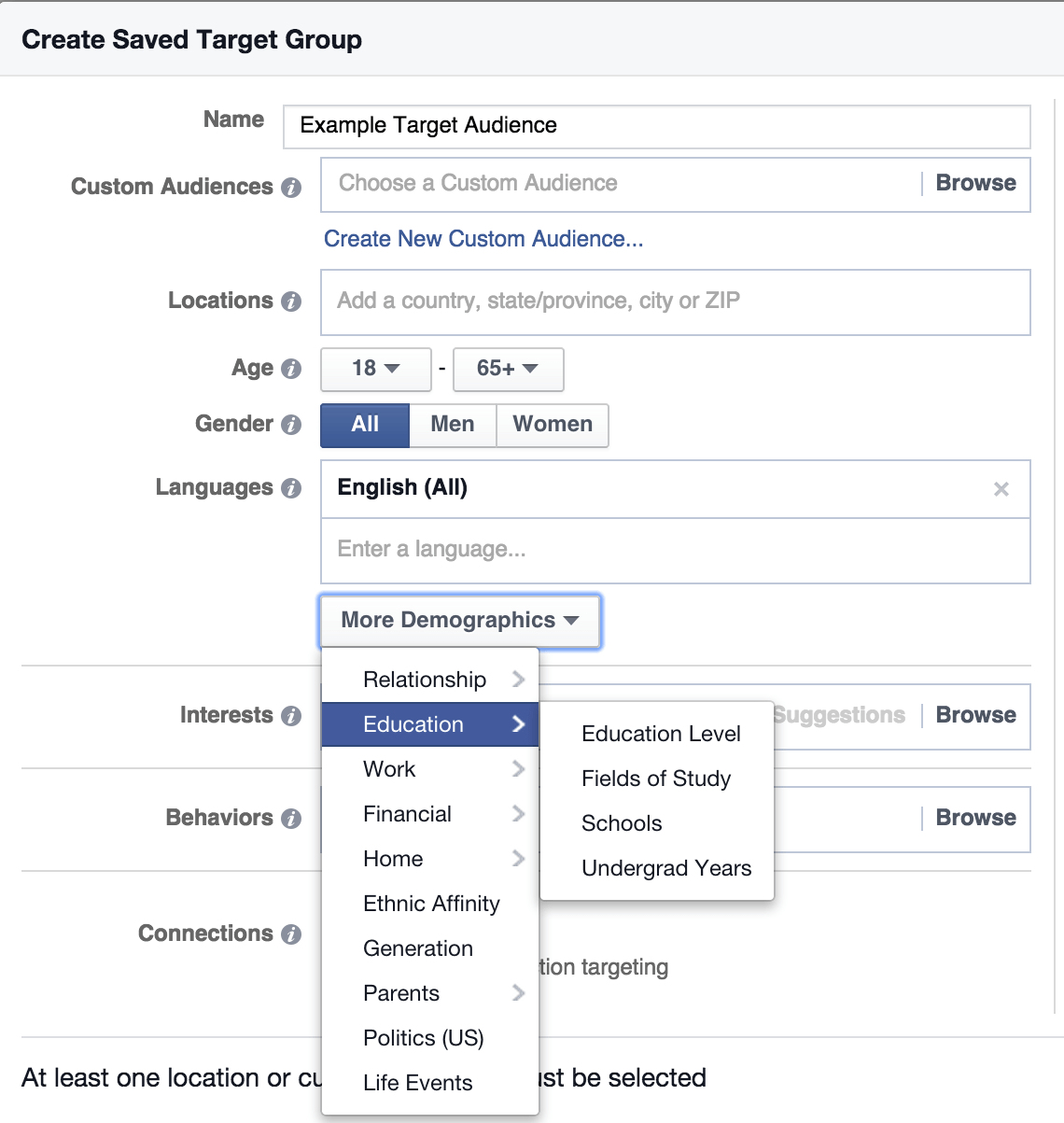 In addition to more widely available demographic data like gender, relationship status, age and location - Facebook collects data and creates profiles for:
- Financial – Income, Net Worth
- Home – Home Type, Home Ownership, Household Composition
- Parents – Parents of children within a specific age range etc.
- Politics – Preferred political party etc.
- Life Events – new job, anniversary coming up, newly engaged, just married etc.
Here are a few examples of the type of targeting Facebook enables: Interest  Behavioral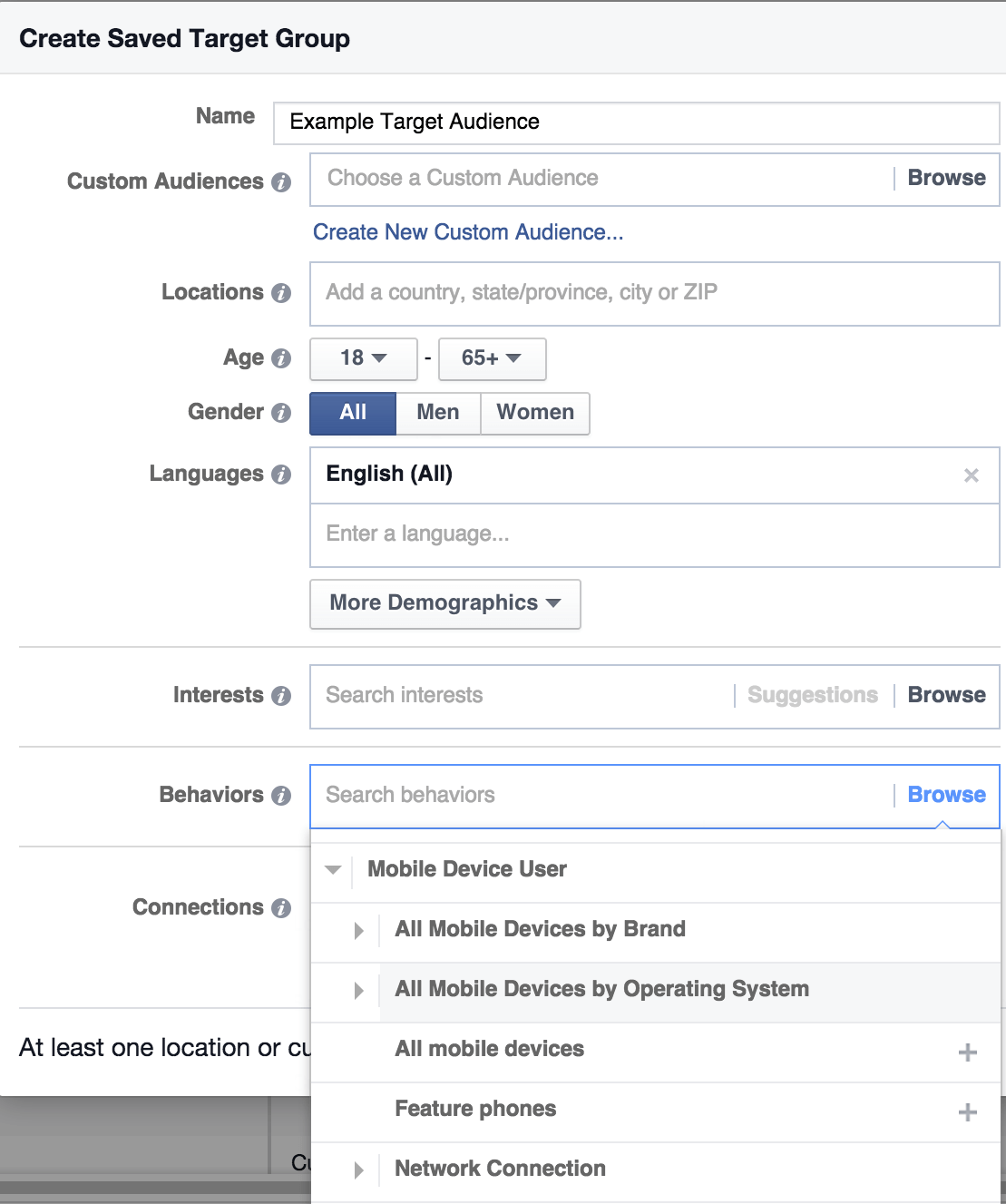
Custom Audiences
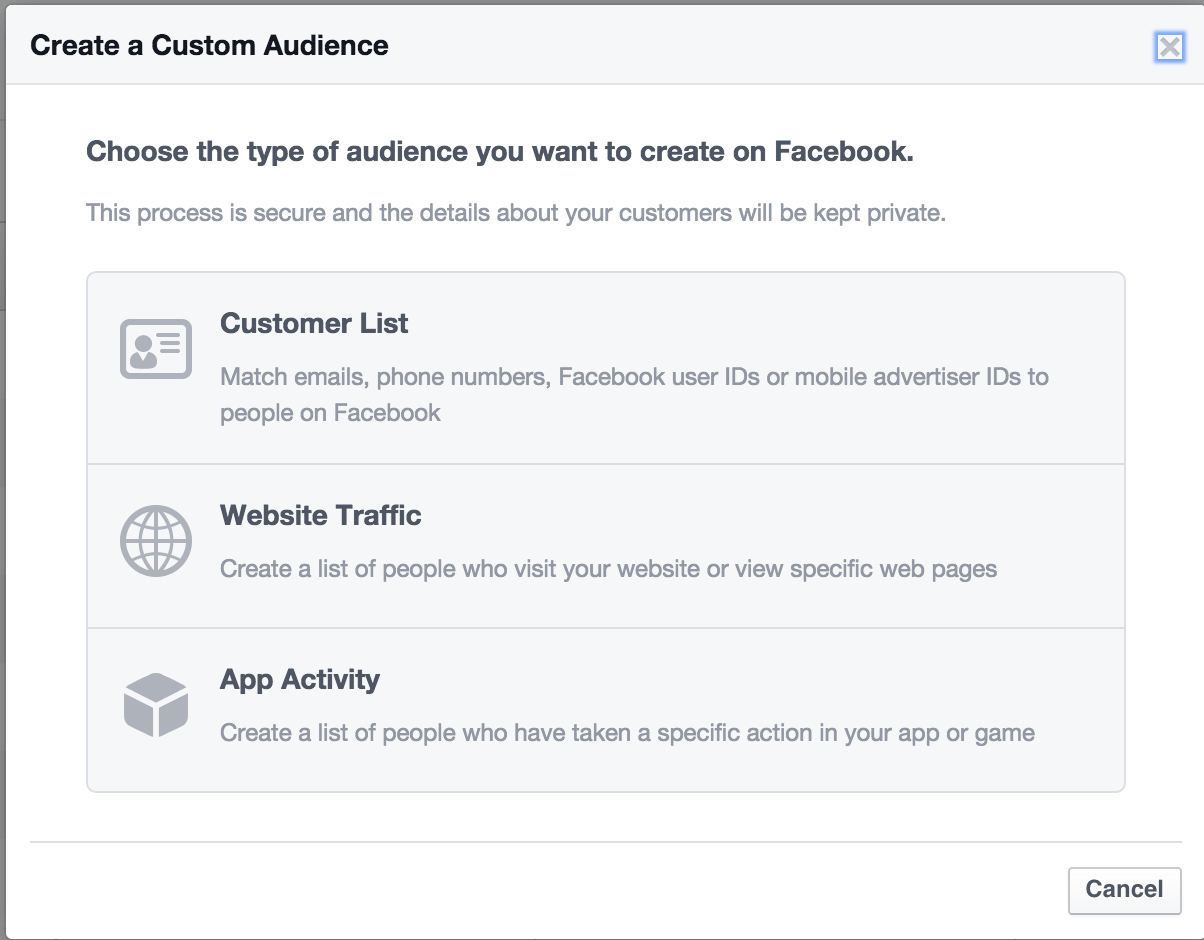
A group of Facebook users that you create in one or a combination of the following ways:
upload a list - likely an email list. Could be people who signed up for your beta, or are your current customers and likely users of your mobile app.
have completed a specific action on your website
- visited the home page
- visited the pricing page
- registered and viewed the “thankyou page”
people who have taken a specific action (or series of actions) in your app
- installed within last 30 days
- purchased in app item
- shared on facebook from within app
 You can then target even further based on the targeting options above.
Lookalike
Now that you have your custom audiences - you can try to recreate this audience. Exploring Audience Insights is valuable finding new ways to reach your target users - but not the best route for creating a broader target audience. 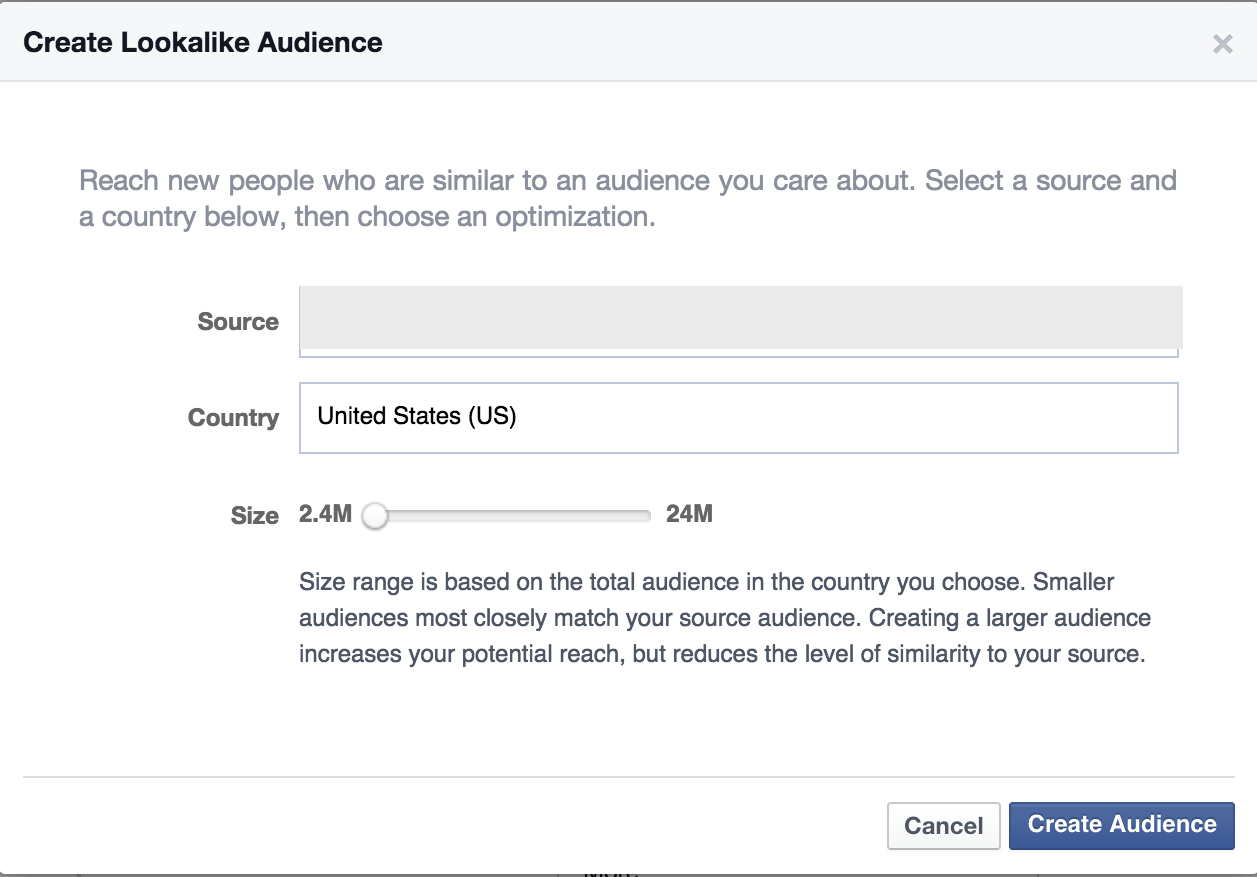 The very best way to find an audience that is likely to respond like your Custom Audience did (signed up for email, visited a website, performed an action in your app) is by asking Facebook to find the most similar users across their network based on all the variables they track. Very cool, insanely useful. You can create a lookalike by reach or precision.
Part Two will introduce Insights, Retargeting and walk thru a few examples of using Facebook for a mobile app campaign.
More blog-posts like this:
5 Best Practices for Apple Search Ads
Are you leveraging Apple Search Ads the right way? Take a look at these recommendations to optimize your paid campaigns and target the right users.
Halloween App Optimization - App Store Spotlight
Ghostly happenings are among us... and in your app listing too? If you aren't leveraging the power of app seasonality to make relevant tweaks to your store listing you're leaving precious engagement and conversions on the table.
App Store Connect Holiday Schedule 2021
Developers on the iOS App Store should plan in advance of the upcoming Holiday Schedule to allow enough time for apps to get approved during the busy holidays.