

APP STORE OPTIMIZATION BLOG
Gummicube Blog
Want more ASO Tips?


Mobile Trends 2017 - What will Hit in Q1?
Posted on January 14th, 2017
The New Year is here, and with it comes a whole new batch of trends to stay on top of. With regards to mobile trends 2017 has the potential to be a unique year. Last fall Apple shook up the world of mobile in a major way by shortening their Title field and introducing Search Ads. This quarter, expect app developers to refine their technique when it comes to mastering the new App Store ecosystem. Look out for these trends in Q1 2017: Search Ads Get Refined As the year moves on, more and more app developers will begin to discover what performs best for Search Ads. Look for major developers to hit Search Ads even harder in an attempt to expand their search footprint into any relevant keywords. Similarly, as more developers begin to target wider swaths of Search Ads, they will also refine how to best convert users from Search Ads. As the New Year begins, make it a priority to learn the best practices for landing and converting from Search Ads.
What to Expect for Mobile at CES 2017
Posted on January 4th, 2017
The annual Consumer Electronics Show is here again, and it promises to bring a host of exciting information for the tech industry. While Apple and Google have carved out their own times for annual announcements, CES can still have an impact on mobile. Here’s what we can expect from the convention this year.
Holiday App Store Optimization - Capitalizing on the Rush
Posted on December 13th, 2016
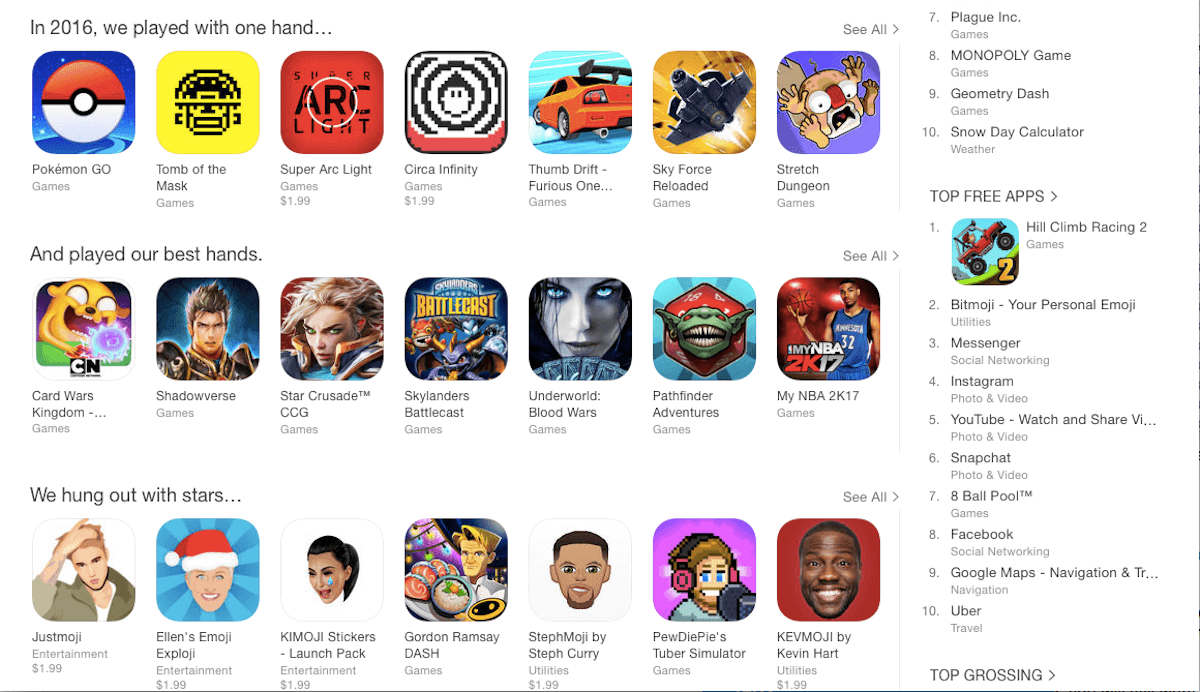
The holidays are almost here, and the influx of new phones, tablets and gift cards that comes along with them will undoubtedly bring a wave of revenue to the App Store and Google Play. Whether or not last year’s record-breaking $1.1 billion in App Store spending can be beat remains to be seen, but regardless app developers would be wise to plan ahead for the holiday season. A well-optimized app needs only a quick update to position itself strongly for the holidays. New creative assets, keywords and a blurb in the description can be enough to capitalize on holiday attention for an app that already has a dedicated fan base. But what about apps that have yet to be optimized? The influx of users that occurs each holiday season can only be fully capitalized upon if your app is appropriately optimized. A strong optimization will increase the number of search terms your app ranks for, and during the vital holiday season, this change alone can make a huge difference. On Apple, that means tailoring your title, keywords and description towards your target audience. Your app’s title should be descriptive and to the point, with a subtitle utilizing highly searched terms to flesh out your rankings and quickly explain your app to users. You only have 50 characters to work with, so be certain to focus on words that will improve your rankings. You want to target the most popular searches in the App Store while describing your app’s features at the same time. Your keyword bank is where you have more room to experiment. Of course, you will still want to use highly searched words in your keyword bank, as these have more potential for putting your app in front of the most users. Focus on words that are relevant for your app and searched the most by users. You may also target competitor apps in your keyword bank, but be careful in doing so – many apps in the store target competitors in their title and keyword bank, but only a few are deemed relevant by Apple. In order to be deemed relevant, your app must have notable similarities to its competitor, and you must position your app’s description in a way such that those similarities seem reasonable. Smaller companies often have difficulty landing large competitors, too, so watch out for that. On Google Play, optimizing your app works a little differently. Your app’s title is still important, but most notably, you don’t have a keyword bank to work with. Instead, Google crawls your app’s description for words that may be relevant to your app. Words that are placed at the front of sentences, or grouped together near similar words, are deemed especially important. That means the best way to optimize your app on Google Play is to create a description that features a bulleted feature list, almost like an outline, that details like features together with one another. Another important element of a Google Play optimization is your app’s Short Description. This is an 80-character field that exists to give users a clear, concise description of your app. The words placed here are especially important for establishing rankings and guiding users to your app’s most important features. By optimizing your app separately for each storefront, you can capitalize on the unique searches and trends that occur in each. And during the holiday season, with potentially over $1 billion being spent over just a few weeks, a strong optimization is more important than ever. If your app hasn’t been optimized yet, now is a great time to start.

Google Play 2017 – What We Can Learn From Google’s Top Trending Games of 2016
Posted on December 10th, 2016
On December 2, Google announced their top trending apps for 2016. Included were games like Pokémon GO and Clash Royale, as well as apps like Face Changer 2 and Castbox. The popularity of these titles won’t surprise most who work in the apps industry, but Google’s announcement is still worth looking into for the sake of determining trends that have influenced the Google Play market this year – And may continue to do so throughout 2017. For starters, Google’s Top Trending Games of 2016 were:

Google Gets Tough on Fake ‘Top Charts’ Apps
Posted on November 3rd, 2016
Google announced this week that they would be cracking down on apps that try to fake their way into the Play Store’s top charts. Through the use of a new detection and filtering method, Google will remove apps that utilize fake or incentivized user ratings and installs to get a boost, and will even remove apps outright from the Play Store. This isn’t anything new for Google – the company made a similar pledge to remove fraudulent top apps a little over a year ago – but what has changed is the method of detection. Google has introduced a method of detection which will supposedly “detect and filter” apps that utilize suspect methods of ascent. Apps that are found to be utilizing these means will be removed from the top charts in an effort to “make Google Play the best platform for enjoying and discovering the most innovative and trustworthy apps”. The big news for many developers is that Google will actually remove apps from the store for violating this principle. Google warned in a blog post that “developers who continue to exhibit such behaviors could have their apps taken down from Google Play”. It’s not as wide-spanning a threat as Apple’s recent title limit change, but the removal of a popular app (even one that only became popular through suspect means) could still shake up the Google Play store. Google promises than in most cases, no action will be required on the case of the developer. They also ask that should developers request marketing assistance from an outside source, they make sure the means of the marketing are legitimate. A strong Google Play campaign doesn’t necessarily need to utilize fraudulent reviews or downloads to boost onto the charts. The strongest method of discoverability is and has always been search; most app downloads come from searches, not from the top downloads charts. Similarly, the primary determinants of your app’s keyword rankings are its title, short description and long description. A solid marketing agency will take these elements into account instead of suggesting burst campaigns or fraudulent downloads.

ASO Trends for Fall 2016
Posted on August 17th, 2016
Another season, another batch of brand-new App Store trends. This Fall you’ll find everything from presidents to Pikachu ruling the mobile roost. Look for these topics to dominate the mobile conversation in Fall 2016.

Complete ASO Solution
Gummicube addresses every aspect of ASO from technology to execution and measurement
GET STARTED
Reports Worth Reading For The Latest Mobile App Store Data
Posted on April 8th, 2016
Although there are many sources reviewing and opining on mobile app data, there are a few exceptional
Making Sense of the Recent Apple and FaceBook Results
Posted on February 11th, 2016
Allocating budgets and prioritizing projects are primary concerns for marketers and executives. We rely on industry conferences and chatter, what competitors are doing and what is working internally to help guide these decisions. Two of the biggest and most influential companies in technology - one being the biggest company globally, ever - released

Trends in Mobile Marketing
Posted on February 6th, 2016
Mobile app usage and the enormous volume of apps continues to impact

Growth and Advancements in Mobile eCommerce
Posted on January 12th, 2016
Mobile ecommerce can impact a mobile app's user lifetime values (LTVs) and the value and cost of mobile ad space. Whether you have a reason to implement mobile shopping in your apps or not, mobile ecommerce impacts your mobile app portfolio. With 2015 closed out, and the holiday season shopping data complete - we can get a good idea of how big of an impact ecommerce has had on retail, and what the impact of mobile was on ecommerce and in-store shopping.

Enterprise Mobile Apps and Mobile's Move into Business
Posted on January 8th, 2016
In Tim Cook’s introduction of the new iPad Pro during Apple’s fall event, and in subsequent interviews - the message was clear - the iPad Pro is to be a business laptop replacement. Apple makes the majority of their revenue from selling hardware. Public partnerships with IBM, Cisco and other enterprise app publishers support the narrative - Apple is aiming to sell more hardware in the enterprise and they are driving demand for their hardware via apps. The implication for mobile app publishers and marketers is the potential for a much larger audience for your apps as Apple leads the charge of the mobile ecosystem replacing the WinTel environment represented by the desktops and laptops used across the enterprise today. Apple and IBM announced their unlikely partnership mid-year 2014. 18 months later IBM is showcasing 100+ iOS apps. SAP has 67 published to the Business > Enterprise category of the app store alone.
The Mobile Impact on Holiday Shopping
Posted on December 23rd, 2015
As we leave for our holiday vacations, let’s take a look at how mobile and mobile apps have not only nudged their way into retail, but how mobile shopping is now leading much of the shopping experience. We are not talking about mobile or apps taking over only ecommerce (which they are), but the huge impact mobile is having in “brick and mortar” - meaning the impact of mobile on all retail sales. Until recently, there was a clear divide between ecommerce sales and “in store” sales.